Hey everyone, it’s Jake from Hexagon Perforated Metal here — and if you’ve ever been shopping for filtration, screening, fencing, or even decorative architectural materials, you’ve probably stumbled on the terms “hexagon perforated metal” and “wire mesh hexagon” online. At first glance, they both look like they’re made of hexagons, right? I’ve had so many customers reach out mixing these two up, asking which one works better for their project. That’s why I wanted to break down the real differences between them, no confusing jargon, just straight talk from someone who’s been in the metal fabrication game for 8 years. Hexagon Perforated Metal
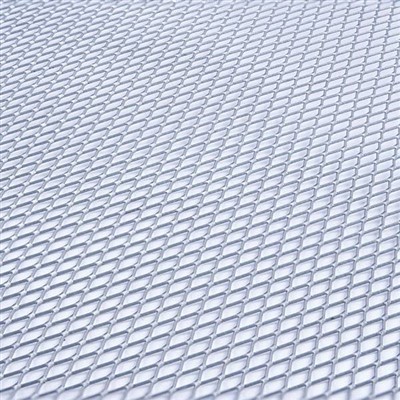
First, let’s start with the basics, but skip the stuff you can find on a random Google search. Let’s talk about how each is actually made. Hexagon perforated metal is what we call a solid sheet product — like a thin plate of steel, aluminum, or even copper that goes through a huge machine with a custom die. That die punches uniform hexagon shapes right out of the sheet. There’s no weaving, no bending wires together; it’s a single piece of metal, just with holes cut into it. The hexagons here are crisp, sharp, and evenly spaced, and the edges of each hole are smooth because the die cuts them clean, no frayed bits.
Wire mesh hexagon, though? That’s a whole different animal. It’s not a solid sheet — it’s made by weaving individual metal wires together. Specifically, two sets of wires: warp wires that run lengthwise, and weft wires that run crosswise, crossing each other to form those hexagon gaps between them. Think of it like a really tight fabric, but made of metal instead of thread. The hexagons here aren’t holes cut into a solid; they’re the empty spaces between the intersecting wires. That means the edges of the “hexagons” (the parts that make the shape) are the wires themselves, so they’re a little rough if you run your finger over them, especially if it’s a cheaper, thinner wire.
Now, let’s get into the key differences that actually matter for your project — not just how they’re made, but how they perform. Let’s start with strength and durability. Hexagon perforated metal, because it’s a solid sheet, is way sturdier. If you’re using this for something like a security screen for a storefront, or a filter that has to hold back heavy debris, or even a fence that kids won’t bend with a swing, perforated hexagon is the way to go. It’s solid all around — no weak points from the weave like wire mesh has. The only weak point is the holes, but we space those to be uniform, so the sheet doesn’t flex or crack easily. I’ve had a customer use our perforated hexagon for a walkable platform on a small rooftop garden, and even after a year of people stepping on it, no dents or tears. A wire mesh would have sagged after a few months there, no question.
Wire mesh hexagon, on the other hand, is way more flexible. It’s lightweight, easy to shape into curves, wrap around pipes, or even cut with regular scissors (if it’s thin enough) — which is why people love it for things like garden trellises, where you want it to bend to fit a arch, or air vents that need to contour to a space. But because it’s woven, it’s also easier to puncture if you apply too much force. If a rock hits it, or if someone grabs it to pull, you can bend a wire out of place, and the whole section of mesh will sag or even tear. It’s not made for heavy-duty use, that’s for sure.
Next up, open area — that’s the percentage of the surface that’s open (the holes or gaps, not the metal itself). This is a big one for filtration, because if you need to let liquid or air pass through without blocking much flow, open area is key. Hexagon perforated metal has a consistent, high open area when the holes are spaced right. For example, if we make a perforated sheet with 1-inch hexagons spaced ½ inch apart, the open area is around 60-70% — that means most of the sheet is open, so flow is smooth, and debris is caught evenly. With wire mesh hexagon, the open area depends on the wire thickness and the size of the hexagons, but it’s almost always lower. Why? Because the woven wires take up space. If you have 1-inch hexagons in wire mesh, the open area is more like 40-50% — less open space means slower flow, which is a problem if you’re doing something like industrial liquid filtration where you need speed.
Wait, but there’s a catch with perforated metal: if you want really small holes, like for fine filtration, perforated can be harder to make. Because the die has to punch small hexagons out of a solid sheet, if you go too small, the holes will be weak — the edges might bend or tear. Wire mesh, though, can be made with way smaller hexagons, because you just use thinner wires. I’ve seen wire mesh hexagons with holes as small as 1/8 inch, perfect for catching tiny particles in air filters. But with perforated, we rarely go smaller than ¼ inch for hexagons, because smaller holes would make the sheet too fragile.
Then there’s the finish and look, which matters a lot for decorative stuff. Hexagon perforated metal has a uniform, flat surface — it sits evenly, so when you mount it on a wall as an accent, or use it for cabinet inserts, it looks sleek, modern, no uneven lines. The edges of the hexagons are sharp and clean, so the shape is super distinct. Wire mesh hexagon has a more textured, industrial look — the woven lines are visible, so it has a softer, more organic feel. That’s why a lot of people use it for rustic garden decor, or vintage-style wall art. But if you want that crisp, geometric hexagon look, perforated is the clear pick.
I get it, a lot of people mix these up because both use hex shapes, and the terminology is vague. I once had a contractor call me asking for “hexagon wire mesh” to use for a structural fence — when I told him he needed perforated, not mesh, he switched his order and told me it was way sturdier than the wire mesh he’d priced out from another supplier. That’s the kind of mistake I hate to see people make, because choosing the wrong one can turn a cheap project into a costly redo.
Let’s also talk about cost, since that’s a big factor. Hexagon perforated metal, because it’s a solid sheet, is usually more expensive upfront. The raw material (steel, aluminum, etc.) is a solid plate, not individual wires, and the die for punching custom hexagons is more expensive than weaving basic wire mesh. But wait — it lasts way longer, so over time, it’s actually cheaper. Wire mesh is cheaper upfront, but if you need to replace it every 1-2 years because it tears or sags, that adds up. For small projects, like a trellis, wire mesh is fine, but for structural or long-term use, perforated is worth the extra cash.
Another thing: installation. Hexagon perforated metal is a rigid sheet, so you need to cut it with metal shears or a plasma cutter, and mount it with screws or brackets. It’s not super hard, but you can’t just bend it around a tree trunk like wire mesh. Wire mesh is way easier to install — you can tie it to posts with zip ties, bend it by hand, even roll it up for storage. That makes it way better for DIY projects, or jobs where you need to adjust it on the fly.
Wait, let’s clear up a common myth: some people think wire mesh is the same as perforated metal, but no — perforated metal comes in all shapes, not just hexagons. You can get round holes, square slots, even custom shapes, all punched out of a solid sheet. Wire mesh also comes in different patterns, like chain link or square, but hexagon is the most common for both. But the core difference is still solid vs woven.
So when should you pick which one? Let’s break it down quick: go with hexagon perforated metal if you need something sturdy, durable, consistent open area, a crisp look, or a structural use (fencing, walkways, security screens, industrial filtration). Go with wire mesh hexagon if you need something flexible, lightweight, easy to shape, low-cost, or a decorative/rustic use (trellises, garden decor, air vents that contour, lightweight guards).
At Hexagon Perforated Metal, we make both, but our bread and butter is the perforated stuff because that’s where most people end up messing up. If you’re not sure which you need — maybe you’re working on a project and don’t know if a wire will hold or if the open area is enough — just reach out. I’ve been doing this for years, and I can walk you through what works best for your budget and your needs, no sales pitch, just honest advice. Don’t waste time ordering the wrong product and having to send it back — let’s get it right the first time.
If you have any questions, or want to order a sample, just get in touch with our team. We’re here to help, no matter how big or small your project is.
Small Hole Expanded Metal References
- Metal Fabrication Association. "Perforated Metal vs. Wire Mesh: Material Properties and Applications." 2022.
- Industrial Filtration Equipment Guide. "Open Area Calculations for Perforated and Woven Metal Products." 2021.
- Architectural Metal Design Handbook. "Surface Finish and Structural Strength of Perforated vs. Woven Metal Panels." 2020.
- Small Business Garden Supply. "Material Selection for Garden Structures: Flexibility vs. Durability." 2023.
Anping Yilida Metal Wire Mesh Co., Ltd.
Anping Yilida Metal Wire Mesh Co., Ltd. is one of the most reliable hexagon perforated metal manufacturers and suppliers in China, also supports customized service. Please feel free to buy bulk high quality hexagon perforated metal made in China here from our factory.
Address: Wire Mesh Development Zone, Anping, Hebei Province, China
E-mail: sales@wiremesh-yg.cn
WebSite: https://www.yilidametal.com/
