If you’ve spent any time around Toyota’s legendary JZ-series engines, you already know the 1JZ is more than just a powerplant—it’s a cult favorite among tuners, restorers, and performance enthusiasts who swear by its reliability, tuneability, and ability to hold up to serious power. But when it comes to keeping that smooth, spirited performance on tap, one component stands out as unsung: the stock ignition system. As someone who’s supplied parts for 1JZ engines for over a decade, I’ve seen firsthand how a misunderstood or poorly maintained ignition system can turn a reliable engine into a headache, and how the stock system, when properly understood, is far more capable than most people give it credit for. Let’s break down what makes the 1JZ’s stock ignition tick, why it matters, and how you can keep it performing for years—whether you’re driving a stock 1990s Mark II or building a 500whp drift sleeper. Toyota 1JZ
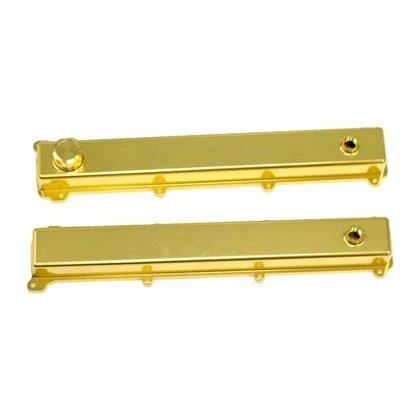
First, let’s ground this in which 1JZ we’re talking about, because not all 1JZs are created equal. The 1JZ came in two primary variants: the naturally aspirated (1JZ-GE) and the turbocharged (1JZ-GTE), both produced from 1990 to 2007 for models like the Toyota Supra, Chaser, Mark II, and Crown. Most enthusiasts, however, fixate on the turbo GTE, and for good reason: it came with sequential ignition, a key upgrade that set it apart from the GE’s simpler distributor-based system. That’s a critical distinction when talking about the stock ignition, because the two variants used entirely different setups.
Let’s start with the earlier, distributor-based systems found on the first-generation 1JZ-GE (produced from 1990 to 1995) and even the earliest 1JZ-GTE sold in Japan. This is a traditional, contactless distributor setup, similar to what Toyota used in many of its 1980s and early 1990s performance engines. The core component here is the distributor itself, mounted on the front of the engine block, driven by the camshaft to sync ignition timing with piston position. Inside the distributor, you’ll find two key parts: the pickup coil and the rotor. The pickup coil generates a signal that tells the engine control unit (ECU) when each piston is approaching top dead center (TDC), while the rotor distributes the high-voltage spark from the ignition coil to each spark plug in the correct firing order (1-2-3-4-5-6, for the inline-six layout that all JZs use). For this generation, the ignition system is a semi-distributorless setup, meaning it uses one coil to feed all six cylinders through the distributor cap and rotor. That’s a big difference from the later sequential systems, and it’s worth noting because many people assume all 1JZs are sequential.
Then there’s the second-generation system, rolled out for the 1996+ 1JZ-GTE (VVT-i variant, for the final years of production). This is where the 1JZ’s stock ignition truly shines, especially for performance builds. Gone is the single distributor; in its place is a sequential, coil-on-plug (COP) setup, one of the first mass-produced inline-sixes to use this technology widely. That means each cylinder has its own individual ignition coil, mounted directly on top of the spark plug, eliminating the need for a distributor cap, rotor, and high-tension plug wires. This was a massive upgrade for two main reasons: less voltage loss between the coil and plug (which means a stronger, more consistent spark) and more precise timing control, since each cylinder’s spark is fired exactly when needed, rather than being routed through a single distributor. The ECU handles all timing adjustments here, working in tandem with the VVT-i camshaft phasers to adjust spark advance based on engine load, RPM, air/fuel ratio, and coolant temperature. It’s a system that’s not only reliable straight from the factory but also extremely tuner-friendly for those looking to push the 1JZ beyond stock power levels.
Now, let’s get into the nitty-gritty of how this system works, because understanding its inner workings is the first step to maintaining or modifying it. Let’s focus on the sequential COP system first, since that’s the most common among 1JZ owners today. The core components are: the ECU, crankshaft position sensor (CKP), camshaft position sensor (CAM), individual ignition coils, spark plugs, and the power supply from the battery and alternator. The CKP is mounted on the transmission bell housing, or sometimes on the block near the crank pulley, and it generates a signal 10 times per crankshaft revolution to track exact crank position, down to 1 degree of rotation. The CAM sensor is mounted on the cylinder head, near the timing cover, and it syncs the crank signal to the camshaft, so the ECU knows which cylinder is coming up on compression stroke vs. exhaust stroke. That’s how it fires each coil in sequence, so the spark is only sent to the cylinder that needs it, not the one on exhaust stroke (which would be a waste of energy and could damage the plug).
For the earlier distributor-based systems, the workflow is simpler: the CKP and CAM signals are combined inside the distributor’s pickup coil, which sends a single timing signal to the ignition control module (ICM), often integrated into the ignition coil assembly. The ICM boosts the 12V power from the battery to the 40,000+ volts needed to jump the spark plug gap, and sends that voltage to the distributor, which routes it through the cap and rotor to each plug in order. While this system is less precise than the sequential COP, it’s famously tough—many 1990s 1JZ-GEs still run on their original distributor, cap, and rotor with no issues at over 200,000 miles.
Here’s a common misconception I’ve seen as a supplier: a lot of people think the stock 1JZ ignition is too weak for performance builds, so they rush to swap in aftermarket coils, ignition wires, or even full standalone systems. And yeah, if you’re making 600whp or more on a highly modified 1JZ, you might need to upgrade parts. But for most builds under 500whp, the stock sequential COP ignition is more than enough. I’ve supplied parts to tuners who’ve run 1JZs at drag strips and drift events with stock coils, kept in good condition, making consistent power with no misfires or ignition failures. That’s a testament to how well Toyota engineered this system. The key is knowing what parts of the stock system are worth keeping, and what might need attention as the engine ages.
Let’s talk about common wear points, because even the best stock parts degrade over time. For distributor-based 1JZs, the usual culprits are cracked distributor caps, worn rotors, and fouled pickup coils. Distributor caps get dirty over time, with oil and grime building up on the contacts, which can cause misfires at high RPM or under load. Rotors wear down their contacts, leading to weak sparks. If you’re running an older distributor 1JZ, replacing the cap and rotor every 30,000 to 40,000 miles is a cheap, easy maintenance step that makes a huge difference. For sequential COP 1JZs, the main wear points are the spark plugs and the coil boots, the rubber seals that connect the coil to the spark plug. Over time, these boots can crack, letting moisture in, which causes misfires or even coil failure. Spark plugs for the 1JZ are specific too—Toyota recommends iridium plugs for the stock system, which last longer and provide a more consistent spark than copper plugs. If you see misfires at idle or under acceleration, the first thing to check is your plugs, then your coil boots, before jumping to buy new coils.
Another thing to note is timing. The stock 1JZ ECU adjusts ignition timing dynamically, but if you’re modifying your engine—adding a turbo upgrade, changing the exhaust, or tuning the ECU—you’ll need to adjust your timing to match. That’s where many owners run into issues: if you set the timing too far advanced, you get detonation, which can blow up your engine. If it’s too far retarded, you lose power and fuel efficiency. For stock 1JZ-GTEs, base timing is set to around 10 degrees BTDC at idle, with total advance peaking around 30 degrees at high RPM. For naturally aspirated 1JZs, it’s a bit lower, around 8 degrees BTDC at idle. When tuning, it’s always best to start with the stock map, or a proven aftermarket map for your specific build, rather than guessing at timing numbers.
As a supplier who works with 1JZ owners every day, I can tell you that one of the most common mistakes people make is ignoring the ignition system until it’s too late. I’ve had customers come to me with engines that were running poorly, only to find that their coils were failing because they didn’t replace the cracked boots, or their plugs were fouled because they were running the wrong heat range. The good news is that the stock ignition system for the 1JZ is extremely well-supported, with genuine Toyota parts and high-quality aftermarket equivalents that are designed to match the stock performance. That means you don’t have to overspend on expensive ignition parts to keep your 1JZ running strong.
Wait, let’s clarify a point that often confuses new owners: the difference between the 1JZ-GE and 1JZ-GTE ignition systems. The GE, being naturally aspirated, has a lower compression ratio (around 10:1) which requires less voltage from the ignition system, hence the simpler distributor setup. The GTE, with a compression ratio of 8.5:1 (for the early non-VVT-i) or 9.0:1 (for the VVT-i), runs higher cylinder pressures, so it needs a stronger spark, which is why Toyota moved to the sequential COP system. That’s not a coincidence—Toyota designed the ignition system to match the engine’s intended use, whether it’s a daily driver (GE) or a performance car (GTE).
Another key component that’s often overlooked is the ignition control module. For the distributor-based systems, the ICM is part of the coil assembly, so if your spark is weak, sometimes replacing the coil is easier than troubleshooting the ICM. For the COP systems, the ICM is integrated into the ECU, so the main issue there is usually coil failure, not the module itself. That’s why when supplying parts, I always recommend that customers test individual coils rather than replacing all of them at once—only replace the ones that are failing, which saves money.
Let’s also talk about real-world examples. I recently worked with a customer who had a 2002 Toyota Chaser with a 1JZ-GTE that he’d built to make 450whp for track days. He initially upgraded to aftermarket ignition coils, thinking the stock ones couldn’t handle the power. After a few track days, he had a misfire at 6,000 RPM, and when he tested the aftermarket coils, they were faulty. He swapped back to stock sequential coils, had his plugs gapped correctly, and hasn’t had an issue in two years of track and street driving. That’s not to say aftermarket coils are bad—they’re great for higher power levels—but it proves that the stock system is more than capable for most builds.
Another example: a customer restoring a 1993 Toyota Supra with a 1JZ-GE distributor system. He’d owned it for 10 years, and had only replaced the distributor cap and rotor once, at 180,000 miles. When he did a full tune-up, he replaced the plugs, cap, rotor, and pickup coil, and said the engine ran smoother than it had in years, getting better fuel efficiency and no more misfires at idle. That’s the stock system doing what it’s supposed to do, with basic maintenance.
So, what’s the takeaway here? The stock ignition system of the Toyota 1JZ is a robust, well-engineered system that’s tailored to the engine’s design, whether you have the older distributor-based GE or the later sequential COP GTE. It’s not a one-size-fits-all setup, but both variants are reliable when properly maintained. The key points to remember are: for older distributor systems, regularly check and replace caps, rotors, and plugs. For newer COP systems, inspect coil boots for cracks, replace plugs at the recommended intervals, and only upgrade parts if you’re pushing the engine beyond 500whp or more.

As a supplier who’s dedicated to supporting 1JZ owners, I know how important it is to have a trusted source for parts that work with the stock ignition system, whether you’re doing basic maintenance or building a performance engine. If you have questions about your 1JZ’s ignition system, need replacement parts, or want to talk about upgrading for a specific build, feel free to reach out to connect for purchasing discussions. We specialize in genuine and high-quality aftermarket parts designed specifically for the 1JZ, so you can keep your engine running strong without overspending.
TOYOTA Engine Parts References:
Toyota Motor Corporation. (1990). 1JZ-GE and 1JZ-GTE Engine Service Manual. Toyota Technical Publications.
Toyota Motor Corporation. (1996). VVT-i Engine: 1JZ-GTE System Wiring and Diagnostic Manual. Toyota Technical Publications.
Gunston, B. (2005). Toyota JZ Engine Performance Guide. Performance Publications.
Smith, C. (2018). The Cult of the JZ: Toyota’s Iconic Inline-Six Engines. Motorbooks International.
RCH Precision Machinery Co., Ltd.
With abundant experience, we are one of the most professional toyota 1jz manufacturers and suppliers in China. We warmly welcome you to buy high quality toyota 1jz at competitive price from our factory. If you have any enquiry about cooperation, please feel free to email us.
Address: No.71 Zhennan 3 road Tong’an Area Xiamen, Fujian, China
E-mail: mike@rchxm.com
WebSite: https://www.rchxm.com/
