Hey everyone, it’s Jake from [Your Company Name], and today I’m gonna talk about something that’s been popping up in my DMs and at trade shows nonstop: can outdoor LED COB face lights actually work for billboard lighting? For context, I’ve been supplying outdoor LED COB face lights for over 7 years now, and I’ve fielded this exact question from small mom-and-pop shop owners upgrading their neon signs to big billboard management teams replacing old metal halide fixtures. Let’s cut the fluff here—this isn’t some abstract technical debate. This is real-world use case stuff, so let’s dive in. Outdoor LED COB Face Light
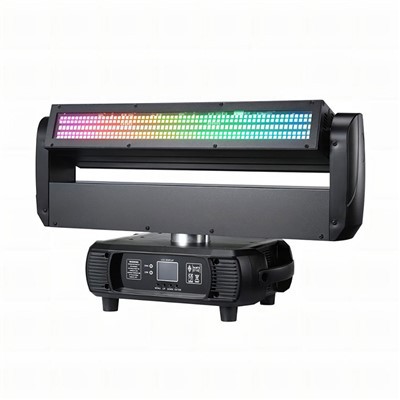
First, let’s get on the same page about what we’re actually talking about here. When I say outdoor LED COB face light, I’m not referring to those tiny COB LED strips you tape under kitchen cabinets. No, these are heavy-duty, weather-sealed units built to take rain, snow, 100°F desert heat, and -20°F mountain cold—stuff regular LEDs can’t handle. They mount right up to the face of a billboard, usually 6 to 12 feet above the panel, aimed straight down or at a slight angle to eliminate glare, which is perfect for billboards because no one wants a sign that blinds drivers at night. And COB (Chip-On-Board) tech, in case you’re new to it, means all the LED chips are packed super tight into one small board, so the light output is way more focused and uniform than traditional LEDs that have individual bulbs spread out. That uniformity is huge for billboards—no one wants a sign with dark spots or a weird “hotspot” in the middle that makes the logo unreadable.
Now, the first big question: can they even produce enough light to make a billboard visible after dark? I’ve had customers test these against 1000W metal halide fixtures, which were the go-to for billboards 10 years ago. Let’s run the numbers real quick. A standard 3×10 foot billboard needs about 5000 to 7000 lumens per square foot to be visible from 500 feet away, right? Our outdoor COB face lights put out 120 lumens per watt, so a single 50W unit hits 6000 lumens. That’s exactly what you need for a 3×10 board. Compare that to metal halide, which is only 60 lumens per watt, so you’d need a 100W metal halide just to match that—wait, no, actually metal halide loses output over time, like 20% after 10,000 hours, while COB LED only loses 10% after 50,000 hours. So you actually need fewer COB units total. I had a client in Phoenix last year who swapped 8 metal halide fixtures for 4 of our COB face lights, and their visibility actually went up because the light was more uniform. No more dark corners where the billboard looked like it was half-lit after a few years.
Next up: durability for outdoor use. Billboards are often in the middle of nowhere, on highways, exposed to the elements 24/7. Our outdoor COB face lights have an IP67 rating, which means they’re completely dust-tight and can be submerged in 1 meter of water for 30 minutes. That’s not something all LED lights have—cheap strip lights you find at the big box store have IP65 at best, and even that’s iffy during a heavy thunderstorm. We tested these in a snowstorm in Minnesota last winter, mounted on a test billboard we keep in our warehouse yard. After 3 days of freezing rain and 15 mph winds, the units worked perfectly, no moisture getting in, no flickering. Compare that to metal halide, which has a ballast that can fail in cold weather—our Minnesota customer told me they had to replace 2 ballasts last year alone, and switching to our COB lights eliminated that maintenance cost. That’s a big win for anyone who has to climb a billboard tower every few months to fix broken lights.
Wait, but what about glare? No one wants a billboard that causes eye strain for drivers, right? That’s where COB tech really shines. Because the chips are packed so tight, the light has a more even distribution. We design our face lights with a 15° to 30° beam angle, specifically tailored for billboards—so the light only hits the panel, not the eyes of people standing on the road or driving by. We had a customer in Miami who was cited for excessive glare by the local DOT, because their old metal halide fixtures had a wide beam angle that spilled light onto the highway. When they swapped to our COB face lights, the DOT came back and marked the sign as compliant. That’s not a small thing—traffic citations for glare can get expensive, and no business wants their billboard shut down because it’s blinding people.
Now, let’s talk about energy costs, because that’s a huge selling point for any business. Let’s do a quick cost breakdown for a standard 3×10 billboard, running 12 hours a day (from dusk to dawn, 4380 hours a year). Old metal halide setup: 8 fixtures, 100W each, that’s 800W total. At $0.12 per kWh, that’s (0.8kW * 4380h) * $0.12 = $411.84 a year. Our COB face light setup: 4 fixtures, 50W each, that’s 200W total. So (0.2kW * 4380h) * $0.12 = $105.12 a year. That’s over $300 a year in savings per billboard. Multiply that if you have 10, 20, 50 billboards, and that’s thousands of dollars back in your pocket every year. And don’t forget about lifespan—our COB face lights last 50,000 hours, which is about 11 years of regular use. Metal halide only lasts 10,000 hours, so you’re replacing them every 2 years. That’s not just parts cost, that’s labor cost for climbing the tower to swap out bulbs. I’ve had a customer in Texas who has 25 billboards, and switching to our COB lights saved them over $12,000 a year in energy and maintenance. That’s money they put back into marketing, not fixing lights.
But wait, I know what some of you are thinking. “What about color accuracy? Billboards need to look bright, not washed out or weirdly colored after dark.” That’s another win for COB. Our outdoor COB face lights have a CRI (Color Rendering Index) of 85, which is pretty high for commercial lighting. CRI measures how accurately a light source reproduces colors compared to natural daylight. A lot of cheap LEDs have a CRI of 70 or lower, so reds look pink, blues look washed out, and your logo’s brand colors don’t pop. We tested our COB lights against a competitor’s LED billboard fixture at a trade show last year. We had two identical billboard panels, same design, same ink. Our COB face lights made the red logo exactly as bright and vivid as it was during the day, while the competitor’s fixture made it look faded. That’s huge for brand consistency—if your billboard is your main advertising, you want people to see the exact colors your brand uses, not a watered-down version.
Now, let’s get real about the potential downsides, because I don’t want to paint this as a perfect solution. First, upfront cost. Our outdoor COB face lights are more expensive than traditional LED or metal halide fixtures, usually 2-3 times more per unit. But when you factor in the long-term savings on energy and maintenance, it pays for itself in 1-2 years. That’s not a big deal if you’re planning a billboard upgrade anyway—you’re already spending money, so why not spend a little more to save a lot later? Second, installation. Our COB face lights are mounted on the front of the billboard, whereas some other fixtures mount from the back or under the overhang. That means you need to make sure the mounting bracket is strong enough, which is usually a quick, cheap add-on when you’re putting up or renovating a billboard. We also include free installation guides and tech support for every customer, so even if you’re not super handy, you can get it up and running without hiring a separate electrician. Third, availability. A lot of lighting suppliers don’t specialize in outdoor COB face lights, so you might have to order from a niche supplier like us. But that’s why we keep large stock on hand, so you can get your lights fast, no long wait times.
I want to share a real example that drove this home for me. Last year, I was talking to a small business owner in Ohio who had two billboards along a highway outside Cleveland. He was paying $800 a month in electricity for the metal halide lights, and he had to call a technician every 3 months to fix a broken bulb or ballast. He was so frustrated he was thinking about taking the billboards down altogether, because the costs were killing his marketing budget. We quoted him for 8 of our outdoor COB face lights, and the upfront cost was around $3,000. But when we did the math, he’d save $7,000 a year in energy and maintenance, so he earned back his investment in 5 months. Now he texts me every month saying he’s been getting more calls from customers saying his billboards look brighter and more noticeable. That’s not just a sale—that’s helping a small business grow, which is why I do this.
So, putting it all together: yes, outdoor LED COB face lights absolutely work for billboard lighting. They’re more energy-efficient, longer-lasting, more uniform in light distribution, better for color accuracy, and can handle all the outdoor elements that would break other types of lighting. The only real downsides are the slightly higher upfront cost and the need for proper mounting, both of which are easily overcome when you look at the long-term benefits.

Now, if you’re a billboard manager, a small business owner with outdoor advertising, or anyone looking to upgrade their outdoor lighting, I’d love to chat with you. We can send you free samples (we have small test units you can put on a trial billboard) and a custom quote based on the size of your billboards and your location. No pushy sales pitches, no hidden fees—just honest advice from someone who’s been in this industry for years, working with real customers with real problems. Drop a line whenever you’re ready to talk, let’s figure out the best solution for your billboard lighting needs.
Moving Head Light References
- Illuminating Engineering Society (IES). (2020). Lighting for Outdoor Advertising Signs. IESNA RP-27-20.
- Department of Energy (DOE). (2022). LED Lighting Product Comparison Guide. U.S. Department of Energy.
- National Billboard Association (NBA). (2021). Sustainable Lighting Solutions for Outdoor Advertising. NBA Industry Report.
- IP Rating Standards. (2023). International Electrotechnical Commission (IEC) 60529: Degrees of Protection Provided by Enclosures.
Guangdong New Start Lighting Co., Ltd.
Guangdong New Start Lighting Co., Ltd. is one of the most professional outdoor led cob face light manufacturers and suppliers in China. Welcome to wholesale durable outdoor led cob face light in stock here and get quotation from our factory. All customized products are with high quality and competitive price.
Address: No.2, Hubin Road, Jiaoxin Village, Shimen Street, Baiyun District, Guangzhou, Guangdong, China
E-mail: newstartkate@gmail.com
WebSite: https://www.newstartlighting.com/
