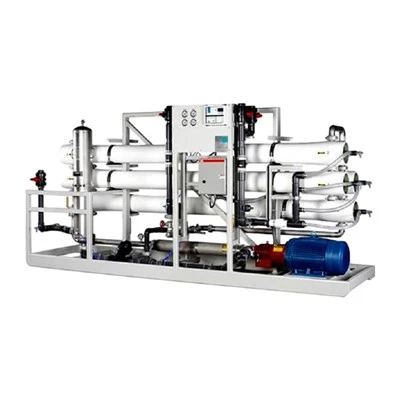
Hey there! As a supplier of large capacity EDI (Electrodeionization) modules, I’ve had my fair share of chats with customers trying to figure out which module is the best fit for their needs. Selecting a large capacity EDI module isn’t a decision to be taken lightly. There are a bunch of factors you gotta consider to make sure you’re getting the most bang for your buck and a module that’ll work like a charm for your specific application. So, let’s dive right in and talk about what those factors are. Large Capacity EDI Module
Water Quality
First off, let’s talk about the quality of the water you’re starting with. The feed water quality is super important because it can have a huge impact on how well the EDI module works and how long it lasts. You need to know things like the total dissolved solids (TDS), hardness, silica content, and the presence of any contaminants.
If the TDS in your feed water is too high, it can put a lot of stress on the EDI module. The module has to work harder to remove all those dissolved solids, which can lead to higher energy consumption and a shorter lifespan. Similarly, high hardness levels can cause scaling inside the module. Scaling is like a build – up of minerals on the membranes, and it can block the flow of water and ions, reducing the module’s efficiency.
Silica is another tricky one. If there’s too much silica in the feed water, it can form deposits on the ion – exchange membranes. These deposits can be really hard to remove and can seriously mess up the performance of the EDI module. So, before you choose a module, it’s a good idea to get your feed water tested. That way, you’ll know exactly what you’re dealing with and can pick a module that can handle it.
Flow Rate
The flow rate is how much water you need the EDI module to process in a given amount of time. This is a crucial factor because you need to make sure the module can keep up with your demand. If you choose a module with a flow rate that’s too low, it won’t be able to produce enough treated water for your needs. On the other hand, if you go for a module with a flow rate that’s way too high, you’ll end up paying more for a module that’s bigger than you actually need.
To figure out the right flow rate for your application, you need to look at your production requirements. How much water do you use in a day, an hour, or a week? You also need to think about any future growth in your water demand. It might be a good idea to choose a module with a slightly higher flow rate than you currently need to account for any expansion down the road.
Purity Requirements
What kind of purity do you need for your treated water? Different applications have different purity requirements. For example, in the pharmaceutical industry, you need water that’s extremely pure, with very low levels of contaminants. In other industries, like food and beverage, the purity requirements might be a bit less strict.
The EDI module you choose should be able to meet your specific purity requirements. Some modules are better at removing certain contaminants than others. So, you need to know exactly what you’re trying to remove from the water and choose a module that’s designed to do that job. You can usually find information about a module’s purity performance in its product specifications.
Energy Consumption
Let’s face it, energy costs are a big deal. You don’t want to end up with an EDI module that guzzles energy like there’s no tomorrow. Energy consumption is an important factor to consider when selecting a large capacity EDI module.
Some modules are more energy – efficient than others. The design of the module, the type of membranes used, and the operating conditions can all affect how much energy it uses. When you’re comparing different modules, look at the energy consumption ratings. A more energy – efficient module might cost a bit more upfront, but it can save you a ton of money in the long run on your energy bills.
Maintenance Requirements
No one wants to deal with a high – maintenance EDI module. Maintenance can be time – consuming and expensive. So, you need to consider the maintenance requirements of the module before you make a purchase.
Some modules are designed to be low – maintenance. They have features like self – cleaning membranes or easy – to – replace parts. These modules can save you a lot of hassle in the long run. On the other hand, some modules might require frequent maintenance, like membrane cleaning or replacement. Make sure you understand what the maintenance schedule is for the module you’re considering and whether you have the resources to handle it.
Cost
Of course, cost is always a factor. You need to find a balance between getting a high – quality EDI module and staying within your budget. The cost of a large capacity EDI module can vary depending on a number of factors, like the size, the flow rate, the brand, and the features.
When you’re looking at the cost, don’t just focus on the upfront price. You also need to consider the long – term costs, like energy consumption and maintenance. A module that’s cheaper upfront might end up costing you more in the long run if it has high energy consumption or requires frequent maintenance. So, do the math and figure out the total cost of ownership for each module you’re considering.
Manufacturer Reputation
The reputation of the manufacturer matters a lot. You want to buy from a company that has a good track record of producing high – quality EDI modules. A reputable manufacturer is more likely to stand behind their products and provide good customer support.
Do some research on the manufacturers you’re considering. Look for reviews from other customers, check their industry standing, and see how long they’ve been in business. A company with a good reputation is more likely to have a reliable product and be responsive if you have any issues.
Compatibility
Finally, you need to make sure the EDI module is compatible with your existing water treatment system. If you’re adding the module to an existing setup, it needs to work well with the other components, like pumps, filters, and storage tanks.
Check the specifications of the module to see if it’s compatible with the flow rate, pressure, and water quality of your existing system. You might also want to consult with a water treatment expert to make sure the module will integrate seamlessly into your system.

So, there you have it! These are the main factors you should consider when selecting a large capacity EDI module. If you’re still not sure which module is right for you, or you want to learn more about our large capacity EDI modules, don’t hesitate to reach out. We’re here to help you find the perfect solution for your water treatment needs.
High Temperature EDI Module References
- Water Treatment Handbook, various industry – specific editions
- Technical papers on EDI technology from leading water treatment research institutions
Fujian Huamo Technology Co., Ltd.
Fujian Huamo Technology Co., Ltd. is one of the most professional large capacity edi module manufacturers and suppliers in China, featured by quality products and good service. Please rest assured to wholesale the best large capacity edi module made in China here and get price list from our factory. Contact us for custom service and OEM service.
Address: No.6 Hengtong Rd, Shanmei Village, Xiamei Town, Nanan City, Fujian Province, China
E-mail: info@huaromembrane.com
WebSite: https://www.hmromembrane.com/
