When it comes to stainless steel vacuum insulated mugs, one crucial yet often overlooked aspect is the vacuum level. As a supplier of these high – quality mugs, I’m here to unravel the mystery behind the vacuum level and explain why it matters so much. Stainless Steel Vacuum Insulated Mug
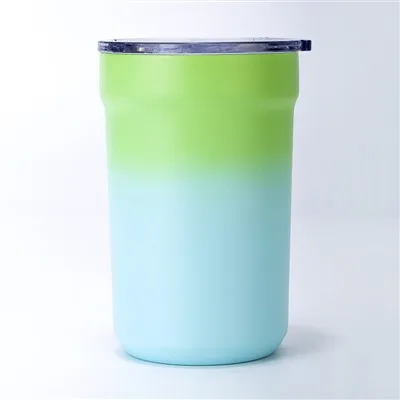
Understanding the Concept of Vacuum in Insulated Mugs
A vacuum, in the context of a stainless steel vacuum insulated mug, is a space devoid of air or any other gas. In the manufacturing of these mugs, a vacuum is created between the inner and outer walls of the stainless – steel construction. This design is based on the principle that air is a poor insulator because it can transfer heat through conduction and convection. By removing the air to create a vacuum, we essentially eliminate these heat – transfer mechanisms, resulting in a highly efficient thermal barrier.
The process of creating a vacuum in a stainless steel vacuum insulated mug is a meticulous one. First, the inner and outer stainless – steel shells of the mug are shaped. The two shells are then assembled with a small gap between them. This gap is where the vacuum will be created. After the assembly, the mug is put through a high – temperature baking process to release any gas molecules trapped within the stainless – steel material. Once the gas is released, the mug is sealed, and a vacuum pump is used to remove as much air as possible from the gap.
Measuring the Vacuum Level
The vacuum level in a stainless steel vacuum insulated mug is typically measured in units of pressure, such as pascals (Pa) or torr. A lower pressure indicates a higher vacuum level. In an ideal situation, a perfect vacuum would have a pressure of 0 Pa. However, achieving a perfect vacuum is extremely difficult, if not impossible, in practical manufacturing processes.
For a high – quality stainless steel vacuum insulated mug, the vacuum level usually ranges from 10⁻² to 10⁻⁴ Pa. At these low pressures, the number of gas molecules remaining in the vacuum cavity is very small, significantly reducing the heat transfer through conduction and convection. For example, a vacuum level of 10⁻² Pa means that there are far fewer gas molecules colliding with the inner and outer walls of the mug compared to normal atmospheric pressure (about 101325 Pa).
Importance of the Vacuum Level
Thermal Insulation Performance
The most significant impact of the vacuum level is on the thermal insulation performance of the mug. A higher vacuum level means better insulation. When the vacuum is well – maintained, the mug can keep hot beverages hot for a longer time and cold beverages cold. For instance, a mug with a high – quality vacuum can keep coffee hot for up to 12 hours or more, while a mug with a lower – quality vacuum might only keep it hot for 4 – 6 hours.
Durability and Long – term Performance
A proper vacuum level also affects the durability of the mug. If the vacuum level is too low, more gas molecules are present in the cavity. These gas molecules can slowly react with the stainless – steel inner walls, causing oxidation over time. Oxidation can lead to the loss of the vacuum and ultimately the degradation of the insulation performance. Additionally, a good vacuum helps to prevent the inner and outer walls from corroding, ensuring that the mug remains in good condition for a long period.
Factors Affecting the Vacuum Level
Manufacturing Quality
The manufacturing process plays a significant role in determining the vacuum level. High – precision machining and sealing techniques are essential. For example, if the sealing process is not done correctly, there may be tiny leaks in the vacuum cavity. These leaks allow air to seep back into the cavity over time, reducing the vacuum level. Our company invests heavily in advanced manufacturing equipment and strict quality control measures to ensure that each mug has a consistent and high – quality vacuum level.
Material Quality
The quality of the stainless – steel material used in the mug also affects the vacuum level. High – grade stainless steel has fewer impurities and a more stable molecular structure. This means that during the high – temperature baking process, less gas is released from the material, making it easier to achieve and maintain a high vacuum level. We source only the best stainless – steel materials from reliable suppliers to ensure the quality of our vacuum insulated mugs.
How to Maintain the Vacuum Level
As a supplier, we also want to share some tips on how to maintain the vacuum level in the mugs. First, avoid dropping or subjecting the mug to strong impacts. A significant impact can damage the inner or outer walls of the mug, causing the vacuum cavity to be breached and the vacuum level to drop. Second, do not use abrasive cleaners on the mug. Abrasive materials can scratch the surface of the stainless – steel walls, which may also lead to leaks in the vacuum cavity.
Our Commitment as a Supplier
As a leading supplier of stainless steel vacuum insulated mugs, we are committed to providing products with the highest vacuum levels. Our R & D team continuously works on improving the manufacturing process to achieve even better vacuum performance. We conduct strict quality inspections on every single mug to ensure that it meets our high – standards.
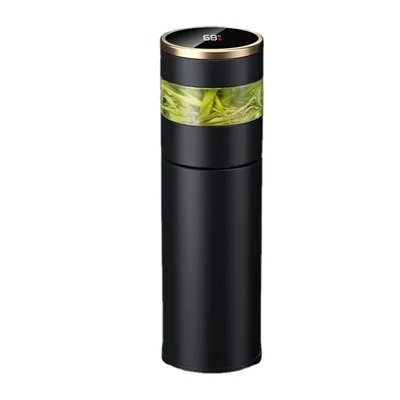
We understand that the vacuum level is a key factor for our customers, whether they are retailers looking for high – quality products to sell or end – users who want a mug that can keep their drinks at the right temperature for a long time. That’s why we spare no effort in optimizing the vacuum level in our mugs.
Stainless Steel Vacuum Insulated Mug If you are interested in our stainless steel vacuum insulated mugs and would like to discuss a potential purchase, we welcome you to reach out to us. Our sales team is ready to provide you with detailed product information, pricing, and any other support you may need. We believe that our mugs, with their excellent vacuum levels and overall quality, will be a great addition to your product portfolio or daily life.
References
- Incropera, F. P., & DeWitt, D. P. (2001). Fundamentals of Heat and Mass Transfer. John Wiley & Sons.
- Bergman, T. L., Lavine, A. S., Incropera, F. P., & DeWitt, D. P. (2011). Introduction to Heat Transfer. John Wiley & Sons.
Jiaxing Huading Vacuum Flask Technology Co., Ltd.
With abundant experience, we are one of the most professional manufacturers and suppliers of stainless steel vacuum insulated mug in China. Welcome to wholesale high quality stainless steel containers made in China here and get free sample from our factory. We also accept customized orders.
Address: No.628 Xingping First Road Pinghu Zhejiang China
E-mail: yangdongyan@gint.cc
WebSite: https://www.huadingtop.com/
