Hey there! I’m a supplier of welded gabion mesh, and today I want to talk about a question I get a lot: Can welded gabion mesh be galvanized? Welded Gabion Mesh
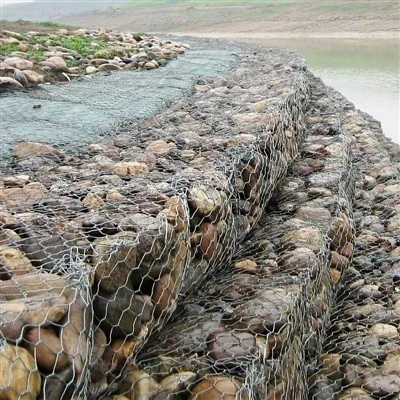
Let’s start with the basics. First off, what is welded gabion mesh? It’s a type of mesh made by welding steel wires together at their intersections. This creates a strong and stable grid-like structure. Gabion meshes, in general, are super useful in a bunch of different applications. They’re often used in civil engineering projects like retaining walls, erosion control, and for building barriers along rivers and shores.
Now, onto galvanization. Galvanization is a process where a protective zinc coating is applied to steel or iron to prevent it from rusting and corroding. Rust is the enemy of any metal structure, especially when it’s going to be exposed to the elements for a long time. A zinc coating acts like a shield, sacrificing itself to protect the underlying metal.
So, can welded gabion mesh be galvanized? The short answer is yes, absolutely! Galvanizing welded gabion mesh is both possible and highly beneficial. Let’s dig into the details of why and how it’s done.
Why Galvanize Welded Gabion Mesh?
-
Corrosion Resistance
The main reason to galvanize welded gabion mesh is to give it better corrosion resistance. When the mesh is used in outdoor environments, it’s constantly exposed to water, moisture, and various chemicals. Without a protective coating, the steel in the mesh would start to rust pretty quickly. Rust weakens the mesh over time, reducing its strength and structural integrity. A zinc coating, on the other hand, forms a barrier that keeps the moisture and oxygen from reaching the steel. This means the mesh can last much longer, even in harsh conditions. -
Cost-Effectiveness
Galvanizing is a cost-effective way to protect welded gabion mesh. Compared to some other anti-corrosion treatments, the initial investment for galvanization is relatively low. And because the galvanized mesh lasts longer, you save money in the long run by not having to replace the mesh as often. It’s a win-win situation! -
Aesthetic Appeal
Galvanized welded gabion mesh has a nice, clean appearance. The shiny zinc coating gives it a modern and professional look. This can be important, especially in projects where the gabion mesh is visible, like in landscaping or architectural applications.
How is Welded Gabion Mesh Galvanized?
There are two main methods of galvanizing welded gabion mesh: hot-dip galvanizing and electro-galvanizing.
- Hot-Dip Galvanizing
This is the most common and reliable method. In hot-dip galvanizing, the welded gabion mesh is first cleaned to remove any dirt, grease, or oxides from the surface. Then, it’s dipped into a bath of molten zinc at a temperature of around 450°C (842°F). The zinc reacts with the steel to form a series of zinc-iron alloy layers on the surface. This creates a thick and durable coating that provides excellent long-term protection.
Hot-dip galvanized welded gabion mesh is known for its high corrosion resistance and long lifespan. It can withstand harsh weather conditions, including saltwater exposure, making it ideal for coastal projects. However, the process can be a bit more expensive and time-consuming compared to electro-galvanizing.
- Electro-Galvanizing
Electro-galvanizing is a different process. In this method, the welded gabion mesh is placed in an electrolyte solution, and an electric current is passed through it. This causes zinc ions from the solution to be deposited onto the surface of the mesh. The result is a thinner zinc coating compared to hot-dip galvanizing.
Electro-galvanized welded gabion mesh is less expensive and has a smoother finish. It’s a good option for projects where the mesh won’t be exposed to extremely harsh conditions. For example, it can be used in indoor applications or in areas with low humidity. However, it doesn’t offer the same level of long-term protection as hot-dip galvanized mesh.
Quality Considerations
When you’re looking for galvanized welded gabion mesh, there are a few things you need to keep in mind to ensure you’re getting a high-quality product.
-
Coating Thickness
The thickness of the zinc coating is crucial for corrosion resistance. Thicker coatings generally provide better protection. For hot-dip galvanized mesh, the coating thickness is typically measured in grams per square meter (g/m²). A good quality hot-dip galvanized welded gabion mesh should have a coating thickness of at least 275 g/m², although thicker coatings may be required for more demanding applications. -
Uniformity of Coating
The zinc coating should be uniform across the entire surface of the mesh. You don’t want to have thin spots or areas where the coating is missing. Inconsistent coating can lead to premature corrosion in those areas. -
Adhesion
The zinc coating should adhere well to the steel. If the coating doesn’t stick properly, it can flake off over time, leaving the steel exposed to rust. A simple bend test can be used to check the adhesion of the coating. If the coating cracks or peels during a gentle bend, it may not be of good quality.
Applications of Galvanized Welded Gabion Mesh
Galvanized welded gabion mesh is used in a wide range of applications, thanks to its strength and corrosion resistance.
-
Retaining Walls
Galvanized welded gabion mesh is often used to build retaining walls. The mesh is filled with stones or other suitable materials to create a strong and stable structure. The galvanized coating ensures that the mesh can withstand the pressure of the soil and the elements, making it a reliable choice for long-term use. -
Erosion Control
In areas where soil erosion is a problem, galvanized welded gabion mesh can be used to stabilize the soil. It can be installed along riverbanks, slopes, or shorelines to prevent the soil from being washed away by water. The mesh holds the soil in place, while allowing water to pass through, reducing the impact of erosion. -
Landscaping
Galvanized welded gabion mesh can be used in landscaping projects to create decorative elements such as planters, fences, or garden walls. Its clean and modern appearance adds a touch of style to outdoor spaces. And because it’s corrosion-resistant, it can withstand the elements without looking worn out.
Conclusion

So, to sum it up, welded gabion mesh can definitely be galvanized, and it’s a great idea to do so. Whether you choose hot-dip galvanizing or electro-galvanizing depends on your specific needs and the conditions the mesh will be exposed to. As a supplier of welded gabion mesh, I’ve seen firsthand the benefits of galvanization. It not only extends the lifespan of the mesh but also improves its performance and appearance.
Woven Gabion Mesh If you’re in the market for high-quality galvanized welded gabion mesh, don’t hesitate to reach out. I can provide you with all the information you need and answer any questions you might have. We can discuss your project requirements and find the best solution for you.
References
- ASTM A123/A123M – Standard Specification for Zinc (Hot-Dip Galvanized) Coatings on Iron and Steel Products
- BS EN ISO 1461:2020 – Hot dip galvanized coatings on fabricated iron and steel articles — Specifications and test methods
Hebei Tengshan Wire Mesh Co., Ltd.
With abundant experience, we are one of the most professional welded gabion mesh manufacturers and suppliers in China. Please feel free to buy advanced welded gabion mesh made in China here from our factory. Quality products and reasonable price are available.
Address: 300 Meters South of Beihoutuan Village, Anping County, Hengshui City, Hebei Province
E-mail: bellawiremesh123@gmail.com
WebSite: https://www.tengshan-metal.com/
