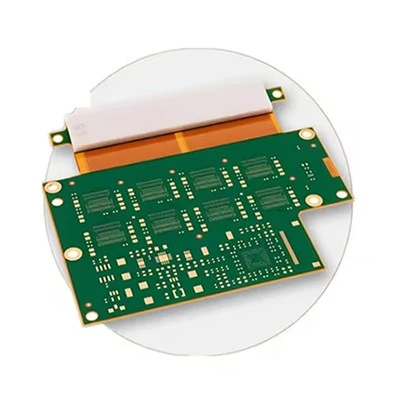
Hey there! I’m a supplier of Rigid – Flexible PCBs, and I’ve been diving deep into this industry for quite a while. Today, I wanna chat about the future development directions for Rigid – Flexible PCBs. Rigid-Flexible PCB
Miniaturization and High – Density Interconnection
In the tech world, everyone’s after smaller and more powerful devices. Smartphones, wearables, and aerospace gadgets are getting tinier but packing more features. That’s where Rigid – Flexible PCBs shine. They can be bent and folded, allowing for a more compact design inside these small devices.
For example, in smartwatches, space is super limited. Rigid – Flexible PCBs can be shaped to fit into the watch’s small casing while still providing all the necessary connections for the display, sensors, and processors. We’re also seeing a trend towards more high – density interconnection (HDI) in Rigid – Flexible PCBs. With HDI, we can have more traces and vias in a smaller area, which means more functionality in a compact space. This is crucial for devices that need to handle a lot of data, like high – end smartphones and tablets.
As a supplier, we’re constantly working on improving our manufacturing processes to achieve even higher levels of miniaturization and HDI. We’re investing in new equipment and technologies to make sure our Rigid – Flexible PCBs can meet the ever – shrinking size requirements of the market.
High – Speed and High – Frequency Applications
The demand for high – speed data transfer is skyrocketing. 5G technology, for instance, requires PCBs that can handle high – frequency signals without losing quality. Rigid – Flexible PCBs are well – suited for these applications because they can be designed to minimize signal interference and loss.
In data centers, where large amounts of data are transferred every second, Rigid – Flexible PCBs can help improve the performance of servers and networking equipment. They can be used to connect different components in a way that reduces the distance between them, which is important for high – speed signal transmission.
We’re focusing on developing materials and designs that can support high – speed and high – frequency applications. This includes using low – loss dielectric materials and optimizing the layout of the traces to reduce signal attenuation. We’re also conducting a lot of testing to make sure our PCBs can meet the strict requirements of these high – end applications.
Integration of Multiple Functions
In the future, Rigid – Flexible PCBs will be more than just a platform for connecting components. They’ll be integrated with multiple functions, such as sensors, antennas, and power management circuits.
Take the automotive industry as an example. Modern cars are becoming more and more intelligent, with features like autonomous driving and in – car entertainment systems. Rigid – Flexible PCBs can be used to integrate various sensors, such as cameras, lidars, and radars, into a single board. This not only simplifies the wiring but also improves the reliability of the system.
We’re exploring ways to integrate different functions into our Rigid – Flexible PCBs. We’re working with other component manufacturers to develop new solutions that can provide more value to our customers. For example, we’re looking at how to integrate antennas directly onto the PCB to reduce the size and cost of the overall system.
Environmental Friendliness
As the world becomes more environmentally conscious, the demand for eco – friendly PCBs is increasing. Rigid – Flexible PCBs are no exception. We’re seeing a trend towards using more sustainable materials and manufacturing processes.
For materials, we’re looking at alternatives to traditional epoxy resins that are more biodegradable and have a lower environmental impact. We’re also trying to reduce the use of heavy metals and other hazardous substances in our PCBs.
In terms of manufacturing processes, we’re implementing more energy – efficient methods. For example, we’re using advanced etching and plating technologies that reduce waste and energy consumption. We’re also focusing on recycling and reusing materials from the manufacturing process to minimize our environmental footprint.
Customization and Personalization
Every customer has different needs, and that’s where customization and personalization come in. Rigid – Flexible PCBs can be customized to meet the specific requirements of different applications.
For startups and small – to – medium – sized enterprises, they may need a unique PCB design for their innovative products. We can work closely with them to understand their needs and develop a custom – made Rigid – Flexible PCB solution.
We’re investing in a flexible manufacturing system that allows us to quickly adapt to different customer requirements. This includes having a team of experienced engineers who can work with customers to design and optimize their PCB layouts. We also offer a range of options for surface finishes, plating, and other features to provide a personalized experience for our customers.
Conclusion

So, there you have it! These are some of the major future development directions for Rigid – Flexible PCBs. As a supplier, we’re really excited about these trends. We’re committed to staying at the forefront of the industry by investing in research and development, improving our manufacturing processes, and providing high – quality products to our customers.
Multilayer FR4 PCB Board If you’re in the market for Rigid – Flexible PCBs, whether you’re a tech giant or a budding startup, we’d love to talk to you. We can offer you the latest technology, customized solutions, and environmentally friendly options. Don’t hesitate to reach out to us for a chat about your PCB needs. Let’s work together to bring your innovative ideas to life!
References
- "Printed Circuit Board Technology Trends" by the Institute of Printed Circuits.
- "High – Density Interconnect in the Electronics Industry" from the IEEE Journal of Electron Devices.
- "Environmental Management in PCB Manufacturing" published by the Green Electronics Council.
Fastline Circuits Co., Limited
Fastline Circuits Co., Limited is one of the most professional rigid-flexible PCB manufacturers and suppliers in China. With abundant experience, we warmly welcome you to wholesale durable rigid-flexible PCB made in China here and get quotation from our factory. All customized products are with high quality and competitive price.
Address: Room 301, Building B3, Fuqiao 4th District, Qiaotou Community, Fuhai Subdistrict, Bao’an District, Shenzhen, Guangdong Province, China
E-mail: sales@fastlinepcb.com
WebSite: https://www.fastlinepcb.net/
