If you’ve been around industrial reverse osmosis (RO) systems for even a few years, you know membrane fouling isn’t just a maintenance headache—it’s a silent killer of efficiency, operational costs, and overall uptime. As someone who’s spent a decade on the ground working with industrial RO clients, testing membranes, and troubleshooting fouling crises, I’ve seen firsthand how small, avoidable missteps turn a well-functioning system into a costly bottleneck. Most people think fouling is something that just “happens,” but 80% of the time, it’s preventable with intentional, data-driven habits—not just expensive chemical cleans when it’s too late. Let me break down what actually causes industrial RO membrane fouling, and the practical, science-backed steps you can take to cut it down (or even eliminate it) for good. Industrial RO Membrane
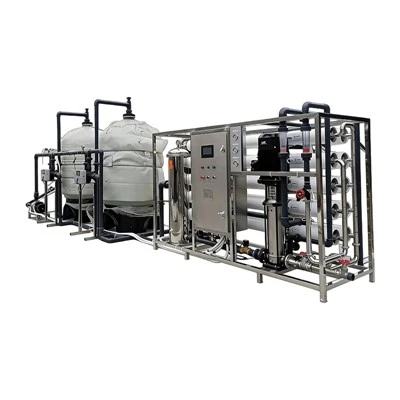
First, let’s get one thing straight: fouling isn’t a single problem. It’s a collection of four main culprits that show up differently depending on your feed water, your system setup, and how you operate it. I’ve seen clients with identical RO systems, same feed water, one running for 3 years without a foulant issue, and the other needing a full membrane replacement in 18 months—all because of small, consistent differences in their day-to-day care. The four most common foulants are organic matter, inorganic scaling, colloidal particles, and biofouling. Organic fouling comes from things like natural organic matter (NOM) from rivers, lakes, or surface water, or even trace lubricants or cleaning agents left in your feed. Inorganic scaling is the big one most people know: minerals like calcium carbonate, calcium sulfate, or silica that precipitate when water is concentrated by the RO process. Colloidal fouling is tiny, suspended particles—clay, silt, rust from pipes, or biological debris—that get trapped on the membrane surface. And biofouling is the nightmare no one talks about until it’s too late: bacteria, algae, and other microbes that grow on the membrane, form a slimy biofilm, and act as a magnet for all the other foulants.
Here’s the hard truth: even the best membrane in the world, straight from a reliable supplier like the one I work for, will foul if your pre-treatment is out of whack. Pre-treatment is the first line of defense, and most plants I visit cut corners here to save money, which comes back to haunt them. Let’s start with the basics, but dive into the details that actually move the needle.
First, optimize your pre-treatment filtration. I’ve seen too many plants install a single 5 micron cartridge filter and call it a day, but that’s nowhere near enough for most industrial RO systems. For feed water with high colloidal or organic content, you need a multi-barrier pre-treatment train: first, a sediment filter (10 micron, or even 20 micron for rough surface water), then a cartridge filter (5 micron minimum, down to 1 micron for sensitive systems), and for really challenging water, a ultrafiltration (UF) system. Wait, you might be thinking—UF sounds expensive. But let’s do the math: a $10,000 UF system that reduces fouling by 70% will save you $50,000 a year in membrane replacements and downtime. I worked with a food and beverage plant in the Midwest that was replacing RO membranes every 12 months because of colloidal fouling; we swapped their 5 micron cartridges for a UF system, and their membranes lasted 42 months. That’s a no-brainer, and it’s not just about filtration size—it’s about maintaining those filters. How often do you change your cartridges? If you’re waiting for them to get visibly dirty, you’re already letting particles sneak past. We recommend monitoring pressure drop across your cartridge filters; if the delta-P hits 10 psi, swap them. I’ve had clients who changed cartridges on a schedule (every 3 months) save 20% more than those who only changed when pressure spiked—because sometimes, filters can get clogged silently, especially with fine organic particles.
Next, adjust your pH and antiscalant dosing to stop inorganic scaling before it starts. Inorganic fouling happens when the concentration of a mineral exceeds its solubility limit, right as the RO process concentrates the water by 15x to 40x. The old approach was to lower pH to soften calcium, but that often leads to higher corrosion in the RO system’s piping, or even silica scaling if you go too low. The better approach is targeted antiscalant dosing, matched to your feed water chemistry. I always tell clients to test their feed water for scale-forming minerals—calcium, magnesium, barium, strontium, silica—once a week, not just when you’re troubleshooting. We work with our clients to run customized water analysis tests, so we can recommend the right antiscalant: not the one that’s cheapest, but the one that’s formulated for their specific water. For example, a plant treating groundwater high in calcium sulfate needs a different antiscalant than one treating surface water with high silica. A mistake I see all the time is overdosing antiscalant; you’re wasting money, and excess antiscalant can actually contribute to organic fouling by coating the membrane surface and trapping organic matter. So use just enough—we target a 1.5 to 2x multiple of the solubility limit for each mineral, calculated based on your RO’s concentration factor.
Then, address biofouling, the trickiest and most insidious type of fouling. Biofouling starts with a single bacteria cell, which attaches to the membrane surface, excretes a slimy extracellular polymeric substance (EPS) that acts as glue for more bacteria, organic matter, and colloids. Once that biofilm is established, it’s almost impossible to get rid of without aggressive chemical cleaning. The number one mistake here is using the same biocide over and over, which leads to bacterial resistance. I’ve seen clients use chlorine 24/7 in their pre-treatment, only to find that their biofouling is worse than ever because the bacteria evolved to tolerate chlorine. Instead, use a rotating biocide schedule: alternate between chlorine, ozone, and non-oxidizing biocides like isothiazolones. Also, pay attention to free chlorine levels—if you’re using chlorine to treat feed water, make sure you have a dechlorination step (like activated carbon or sodium metabisulfite) before the RO membrane. Too much free chlorine will oxidize the polyamide membrane, breaking down its surface and making it way more prone to fouling. I worked with a pharmaceutical plant a couple years back that tried to save money by skipping dechlorination; their membranes started falling apart in 6 months, and they had to replace the entire 800-element array. That mistake cost them $200,000—way more than the dechlorination system would have.
Now, what about day-to-day operation tweaks that make a big difference? Let’s talk about cross-flow velocity and recovery rate. Cross-flow velocity is the speed of the feed water flowing across the membrane surface; it’s what carries foulants away, instead of letting them deposit. If your velocity is too low, foulants settle on the membrane. Most industrial RO systems are designed for a cross-flow velocity of 0.1 to 0.2 m/s for spiral wound membranes, but I’ve adjusted that for clients with high fouling feed water to 0.25 m/s—just don’t go higher than that, or you’ll get too much pressure drop across the system, wasting energy. Then recovery rate: that’s the percentage of feed water that turns into permeate (product water). The higher the recovery, the more concentrated the remaining water (brine) gets, which means higher chance of scaling and fouling. For most systems, 75% recovery is a safe number, but if your feed water is soft (low in minerals), you can push it to 80%. If your water is high in organics or colloids, stick to 65%—any higher, and you’re just asking for trouble. I had a power plant in the South that increased their recovery rate from 70% to 78% to save water; within 6 months, their membrane delta-P (pressure difference across the membrane) went up by 40%, and they had to do a chemical clean 2 months early. That’s a perfect example of how a small operational change can backfire.
Then there’s regular monitoring and proactive cleaning, not reactive. Most plants only check their RO system when production drops or permeate quality gets bad, but by then, fouling is already advanced. We recommend tracking three key metrics daily: permeate flow rate, salt rejection rate, and pressure drop across the membrane array. If permeate flow drops by 10% or pressure drop rises by 15%, that’s your cue to do a light cleaning—before it gets to a 20% flow drop, which means heavy fouling. Don’t wait for a crisis. Also, when you do clean, use the right cleaning chemicals, in the right sequence. A lot of plants just dump a generic acid or base into the system, but cleaning is a process. First, a low-pH (acid) clean to remove inorganic scaling and colloids, then a high-pH (base) clean with a small amount of surfactant to remove organic and biofouling. Never use a strong acid (like concentrated HCl) directly on the membrane without diluting it, and never use chlorine in a cleaning solution—even residual chlorine can damage the membrane. I’ve cleaned hundreds of membranes, and the ones that last the longest are cleaned proactively, with a tailored solution for their specific foulant, instead of reactive cleans that just scratch the surface.
Wait, let’s also talk about the membrane itself. Not all membranes are created equal, and choosing the right membrane for your application can cut fouling by a lot. For example, low-fouling RO membranes have a smoother surface, a tighter charge (that repels organic matter), and a thinner active layer that’s more resistant to biological growth. A lot of clients ask us, “Why should I pay more for a low-fouling membrane?” Let’s do the numbers: a standard RO membrane costs $350, a low-fouling one costs $450. If the low-fouling membrane lasts 2x longer (4 years vs 2 years), you’re spending $112.50 a year per element vs $175—so you save 35% annually, plus you spend less on pre-treatment and cleaning chemicals. That’s a huge ROI. I’ve seen clients swap from standard to low-fouling membranes, and their fouling rates dropped by 50% within a year. It’s an investment that pays for itself quickly.
Now, let’s address some common myths I hear all the time. Myth #1: “High-pressure RO systems always foul more.” No—pressure is just a function of how hard you push water through the membrane; fouling is about the feed water quality and pre-treatment, not pressure. I worked with a seawater RO plant operating at 800 psi, and their fouling rate was half that of a brackish water plant at 150 psi because their pre-treatment was perfect. Myth #2: “Chemical cleaning kills all fouling.” No—if biofouling is too advanced, the biofilm has already penetrated the membrane surface, and even the best chemical clean can’t get rid of it. That’s why proactive monitoring is non-negotiable. Myth #3: “I can use any antiscalant for my system.” That’s the fastest way to scale. I had a client who used a generic antiscalant recommended by their general maintenance team, only to find out it didn’t account for their high barium levels; within 3 months, they had barium sulfate scaling, and 12 elements had to be replaced.

At the end of the day, reducing RO membrane fouling isn’t about one big fix—it’s a combination of good pre-treatment, smart operational tweaks, proactive monitoring, and choosing the right membrane. As an industrial RO membrane supplier, I’ve seen what works and what doesn’t, and the clients who invest in these steps don’t just have longer membrane lifespans—they have more reliable production, lower operating costs, and less downtime. If you’re struggling with fouling in your RO system, or you want to make sure your next membrane investment cuts your fouling rate, let’s talk. I’ve worked with industrial plants across food and beverage, power, pharmaceuticals, and manufacturing, and I can help you tailor a solution to your specific feed water and operational needs. Don’t wait until your next membrane replacement is a surprise—reach out to start a conversation about optimizing your RO system to reduce fouling and save money.
Urea Purification Membrane References
- State-of-the-art in reverse osmosis membrane fouling control: A review. Journal of Membrane Science, vol. 526, 2017, pp. 150-169.
- Industrial Reverse Osmosis: Design, Operation, and Maintenance. McGraw-Hill, 2020.
- Biofouling of Reverse Osmosis Membranes: Mechanisms, Monitoring, and Mitigation. Water Research, vol. 148, 2019, pp. 439-458.
- Antiscalant dosing strategies for inorganic scaling control in RO systems. Desalination, vol. 450, 2019, pp. 112-121.
- Low-fouling reverse osmosis membranes: Material science and performance. Journal of Membrane Science, vol. 598, 2020, pp. 117685.
Fujian Huamo Technology Co., Ltd.
Fujian Huamo Technology Co., Ltd. is one of the most professional industrial ro membrane manufacturers and suppliers in China, featured by quality products and good service. Please rest assured to wholesale the best industrial ro membrane made in China here and get price list from our factory. Contact us for custom service and OEM service.
Address: No.6 Hengtong Rd, Shanmei Village, Xiamei Town, Nanan City, Fujian Province, China
E-mail: info@huaromembrane.com
WebSite: https://www.hmromembrane.com/
