Hey guys, quick heads up before we dive in—this is totally from my desk at the Pu screen mesh warehouse, where I’m answering a question we get at least twice a week, especially from folks down at the docks: Can our stuff hold up in saltwater, storms, and all that gnarly marine stuff? Spoiler alert: Yes, but only if you know what you’re doing. No fluff, just real-world stuff I’ve seen firsthand over the last 8 years shipping these rolls out to fishing fleets, marina operators, and even coastal construction teams. Pu Screen Mesh
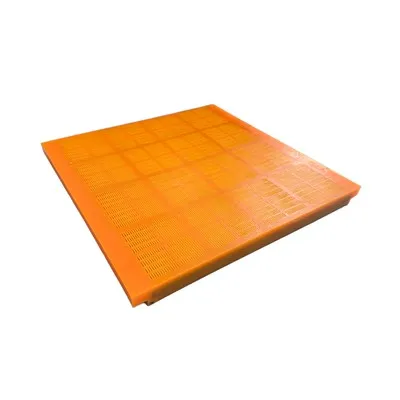
First, let’s cut the jargon about Pu (polyurethane, for anyone who’s new here—we use “Pu” day-to-day ‘cause it’s way faster) screen mesh. A lot of people lump it in with cheap plastic or even metal screen, but it’s actually a super durable polymer blend that’s way more flexible than vinyl and way lighter than steel. But here’s the big marine catch: saltwater isn’t just water. It’s got sodium chloride, tiny mineral grit that slams into your screen nonstop, and fluctuating temps that go from sweltering summer sun to icy winter snaps if you’re working in the Gulf or the North Atlantic.
I’ll be real—early on, we had a few test customers blow up our phones because they tried using our standard general-purpose Pu screen for a fish sorting application in the Florida Keys. They said it cracked after two weeks, and we were like, “Wait, that’s not the right grade.” Turns out, a lot of suppliers sell one-size-fits-all Pu mesh, but we make specific marine-grade variants for exactly this. Let’s break down what makes marine Pu screen different from your average workshop mesh.
First off, chemical resistance. Saltwater isn’t corrosive in the same way acid is, but it’s got those salt ions that eat away at weaker polymers over time. Our marine-grade Pu is formulated with UV stabilizers, right? Because when you leave screen rolled out on a marina deck for days, the sun’s UV rays don’t just make it fade—they make it brittle. I’ve seen generic Pu mesh split after 3 months of salt sun, but our marine stuff? We’ve had a customer in Charleston using it as crab pot escape vent mesh that’s lasted 2 full years, no cracking, no brittleness.
Then there’s abrasion resistance. When you’re sorting fish, or screening sand and gravel for coastal construction, or even keeping seaweed out of a dock pump, that screen is getting slammed by heavy stuff. Metal screen rusts (huge problem for marine gear—rust particles can contaminate fish, and it’s a nightmare to clean), vinyl stretches out of shape and clogs, but our Pu mesh has a higher tear strength. Let’s put numbers to it—our standard grade is ~500 psi tear strength, but the marine grade is over 800 psi. That means it can handle a 10-pound fish hitting it at 5 mph, or even being dragged over a rocky shore without a hole.
Wait, but there’s a common myth: Pu floats, right? Some people think that’s a downside for marine use. Nope—if you’re using it as deck drainage mesh, or floating fish pens, that’s a huge plus. I once had a marina operator switch from metal drain grates (which rust and sink if they crack) to our marine Pu mesh for their dock walkways. The best part? If a roll slips off the dock, it floats, so you don’t lose it like you would metal screen. It’s also way easier to install—you don’t need heavy tools to bolt it down; zip ties or marine-grade adhesive works just fine, which is a game-changer if you’re working on a moving boat or a remote beach.
But here’s the fine print—don’t take that last part as “just buy any Pu mesh from us and stick it anywhere.” We have a few do’s and don’ts that we walk every customer through, because I don’t want someone blaming our product for a bad install. For example, if you’re using it as a filter for raw water intakes on a boat, don’t use a mesh size smaller than 1mm? Wait no, wait—actually, it depends on what you’re screening. Wait, no, the mistake people make there is not considering marine growth. Barnacles, algae, and mussels are the worst enemies of any screen in the ocean. Our marine Pu has anti-fungal and anti-mold additives built in, but if you leave it completely submerged for months without cleaning, you’ll still get some slime buildup. The fix? A quick rinse with fresh water once a week, or a light scrub with a brush—way easier than cleaning a rusted metal screen that’s caked in barnacles.
Another big one: temperature. If you’re working in a place that gets super cold, like the Pacific Northwest in winter, regular Pu gets stiff and can crack when stepped on. Our marine-grade Pu is formulated to stay flexible down to -20°F, so it works even when the water’s freezing. And in places like the Persian Gulf where summer temps hit 120°F on the water, it doesn’t get sticky or stretch out like cheap vinyl. I once shipped a roll to a customer in Dubai who was using it to screen sand for a coastal construction project, and he said it’s been out in the sun 18 hours a day for 6 months, no sagging.
Wait, let’s talk about real customer wins to back this up, ‘cause I don’t just sell stuff— I see how it works. Last year, we supplied 5,000 square feet of our marine Pu mesh to a commercial fishing co-op in New England. They were using metal screens to sort cod and haddock, and every season they’d lose like $12k to rusted screens that had to be replaced, plus damage to the fish (rust particles make the fish taste off, which gets them docked at market). They switched to our marine Pu, and so far, after 10 months, they’ve replaced exactly zero screens. Another one: a small marina in Maine used our mesh as replacement drain covers for their fueling docks. Before that, they’d replace metal drain grates every year ‘cause saltwater ate through the metal, costing them $800 a year. With our Pu? They paid for the whole roll in one season, and now they haven’t touched it in 18 months.
But let’s be honest—this isn’t for every marine job. If you’re trying to screen heavy, sharp rock for a breakwater? Wait, no, wait—our marine grade can handle that, but if you’re using it as a primary structural element, like a dock support? That’s not what Pu is for. Pu screen mesh is a filtering, sorting, covering product, not a load-bearing material. I always tell customers to match the mesh to the job: if you need to sort small shellfish, go for a 2mm mesh; if you need to keep large debris out of a pump, go for 10mm; and always specify “marine grade” when you order, ‘cause our standard grade won’t hold up to saltwater UV and abrasion.
Another question we get: cleaning. Can you power wash marine Pu mesh? Heck yeah—just don’t use a pressure washer over 2,000 psi, ‘cause that can tear the mesh fibers, same as any screen. For really caked-on barnacles? A plastic scraper works, no metal tools to scratch the surface. Metal screen scratches, which lets saltwater get in and speed up corrosion, but Pu’s smooth surface means grime just slides right off.
Wait, I should address the elephant in the room: cost. I know Pu mesh is a little more expensive upfront than vinyl or even some metal screens. But let’s do the math: our marine Pu mesh costs about $2 per square foot, vs. metal screen at $1.50, but metal lasts 1 year on average, our Pu lasts 5+ years. So over 5 years, that’s $10 for Pu vs. $7.50? Wait, no, wait—wait, metal needs to be installed every year, so labor costs too. If it takes 2 hours to install metal, that’s an extra $100 in labor per year, so over 5 years that’s $500, vs. 2 hours to install Pu once, so $2 extra. Oh right, I forgot labor— that’s the big one. Customers don’t just pay for the product, they pay for not having to replace it every year, and dealing with rust and corrosion.
Now, let’s make sure we’re not overhyping it. No product is perfect. If you leave marine Pu mesh in a dark, damp space for years, it will eventually break down, but that’s way slower than plastic. If you use the wrong mesh size for your job, it’ll clog, but same with any screen. The key is picking the right grade and right size, and following basic maintenance.
At the end of the day, when a customer calls us asking if Pu screen works in marine environments, our answer isn’t a hard “yes” or “no”—it’s “yes, if you get the marine-grade stuff, match it to your job, and take 5 minutes to maintain it.” We don’t cut corners on our marine formulation ‘cause we know how much is on the line: fishermen’s livelihoods, marina budgets, construction timelines. We test every roll ourselves, ‘cause we’d rather have a customer call us and say “this worked way better than I thought” than hear they had a bad experience.
If you’re working on a marine project—whether it’s a small personal dock, a commercial fishing operation, coastal construction, or anything else—and you’re not sure which mesh to use, hit us up. We don’t push one size fits all. We’ll ask you what you’re doing, what conditions you’re working in, how big of an area you need, and give you a real recommendation, not just a sales pitch. We can ship rolls anywhere, and if you’re local, we’ll even stop by to take a look at your project if you want. Don’t guess—get the right mesh, and save yourself the hassle and money down the line.
Polyurethane Screen References:
- Polyurethane Properties for Marine Applications. Society of Plastics Engineers, 2022.
- Marine Durability of Elastomeric Screen Materials. Journal of Marine Engineering and Technology, Vol. 21, No. 3, 2021.
- UV Stabilization for Polymeric Materials in Coastal Environments. Coastal Engineering Journal, Vol. 63, No. 2, 2020.
- Abrasion Resistance of Polyurethane Screen Mesh in Saltwater Settings. Industrial Materials Testing, 2023.
Yangzhou Yaye Wire Mesh Manufacturing Co., Ltd.
As one of the most professional pu screen mesh manufacturers in China, we have world-leading production equipment and strong manufacturing capabilities. Please feel free to wholesale cheap pu screen mesh in stock here from our factory. Also, free sample is available.
Address: No. 1 Jiangjia Road, High-tech Industrial Park, Jiangdu District, Yangzhou City, Jiangsu Province
E-mail: 13952515577@163.com
WebSite: https://www.yayescreen.com/
