If you’ve ever walked through an industrial plant—a chemical processing facility, a water treatment plant, or a power generation station—you’ve likely come across rows of valves scattered along pipelines, each controlling the flow of fluid, gas, or steam. What you might not have noticed, though, is the small but critical component that makes those valves work: the actuator. For decades, our team at [Valve Actuator Supplier] has worked alongside plant engineers, maintenance managers, and process operators to pick the right actuator for every application, and one of the most common questions we get is the difference between direct-acting and pilot-operated valve actuators. It’s not just a technical detail—getting this wrong can lead to missed production targets, safety hazards, or unnecessary downtime. Let’s break this down, straight from the field. Valve Actuator

First, let’s start with the basics. An actuator’s core job is to supply the force needed to open, close, or modulate a valve. Think of it as the “muscle” of the valve: without it, a valve is just a metal disc or plug sitting inside a pipe, unable to respond to process control signals. Now, the two main categories here—direct-acting and pilot-operated—approach this job very differently, and each excels in specific scenarios.
A direct-acting actuator is the simpler, more straightforward design. At its most basic, it converts a control signal (usually electrical, hydraulic, or pneumatic, depending on the type) directly into mechanical force to move the valve stem. For example, a spring-and-diaphragm pneumatic direct-acting actuator takes compressed air sent to the diaphragm; the air pressure pushes against the diaphragm, compressing the spring, and that motion is transferred straight to the valve stem to open or close the valve. There’s no intermediate step, no extra components, no secondary signal to amplify the force. That simplicity is both its biggest strength and its biggest limitation.
We see direct-acting actuators used all the time for small-to-medium sized valves, or where the required force isn’t extremely high. A 2-inch control valve for a water treatment plant’s chemical dosing system, for instance, works perfectly with a direct-acting actuator—its diaphragm is sized to generate just enough force to move the small valve’s plug against line pressure changes. They’re also often the go-to for low-maintenance applications, since fewer moving parts mean fewer things to break. Last year, we supplied a set of direct-acting actuators to a food and beverage plant for their pasteurization line valves; the plant team loved them because they could replace a worn diaphragm in 15 minutes, no specialized tools needed, and they rarely required calibration during their bi-annual shutdowns. The downside, though, is that as valve size increases, line pressure rises, or you need precise modulation, direct-acting actuators start to hit a wall. A 12-inch valve carrying high-pressure gas, for example, would need a massive diaphragm to generate enough force to move the stem—something that would take gallons of compressed air, be bulky, and expensive to run. That’s where pilot-operated actuators come in.
Pilot-operated actuators, also called pilot-actuated actuators, are built for when you need more force than a direct design can provide, or when you want finer control. The key difference here is the pilot stage: a small, auxiliary actuator that does the heavy lifting for the main actuator. Instead of the control signal directly moving the main diaphragm or piston, it moves a tiny pilot valve, which then directs a larger supply of compressed air, hydraulic fluid, or process pressure to the main actuator’s power element. It’s like having a light switch (the pilot) that turns on a powerful engine (the main actuator)—you only need a small amount of force to flip the switch, but the engine supplies all the power.
Let’s make this concrete. Take a large gas pipeline valve rated for 500 PSI. A direct-acting main diaphragm would need to be huge to generate enough force to hold that valve closed against line pressure. A pilot-operated design, though, uses a 1/4-inch pilot valve that only needs a small 15 PSI signal to open. When the pilot opens, it sends the full 500 PSI of line pressure to the main piston, which is sized to move the large valve stem with far more force than a direct actuator could produce with a similar-sized control signal. This design is compact, uses less control signal power, and can handle much higher forces. We installed a set of these last year for a refinery’s crude oil transfer lines; the refinery’s process engineers told us the pilot-operated actuators cut their valve actuation time in half compared to the direct-acting models they’d used before, which was critical for avoiding pressure surges during transfer.
Another big advantage of pilot-operated actuators is precision modulation. For applications where you need to adjust flow by small increments—like in a pharmaceutical plant’s sterile water system, where even a 1% change in flow can throw off a batch—pilot-operated actuators can respond to tiny changes in the control signal, because the pilot stage amplifies the signal without the lag that direct designs often have. Direct-acting actuators can modulate, but they tend to have more “hunting” (small, unwanted oscillations in valve position) when you’re trying to hold a set point, because the force is tied directly to the control signal. Pilot designs separate the control signal from the power, so you get more stable position holding.
Of course, no design is perfect, and both have specific use cases where they’re the wrong fit. Direct-acting actuators, for all their simplicity, are not ideal for high-force applications. Trying to use a direct actuator on a large, high-pressure valve leads to oversized, heavy units that consume way more energy than necessary. They also tend to be less energy-efficient: a direct pneumatic actuator requires constant air pressure to hold a valve in position, while a pilot-operated actuator can sometimes use a latching pilot that only needs a brief signal to switch positions, no constant power needed. That’s a big deal for plants running 24/7—over a year, the energy savings from pilot-operated actuators can add up to tens of thousands of dollars.
On the flip side, pilot-operated actuators have more parts to maintain. The pilot valve, tubing, and seals can get clogged with debris if the fluid is not filtered properly, or wear out faster in harsh environments. We once had a customer who tried to use a pilot-operated actuator on a slurry line with no filtration, and within a month, the pilot valve was clogged with solid particles from the slurry, leading to a valve failure that shut down their process for 8 hours. Direct-acting actuators, with their simpler design, are far more tolerant of minor contaminants, making them a better pick for dirty, abrasive applications. They’re also more cost-effective for small orders: if you only need one or two actuators for a low-pressure application, a direct model will cost half as much as a comparable pilot-operated unit, with no need for extra tubing or pilot components.
Let’s summarize the key differences to make this easier to remember. Direct-acting actuators have a 1:1 relationship between control signal and output force, simple design, few parts, low upfront cost, best for small valves, low force needs, and dirty environments. Pilot-operated actuators use a separate pilot stage to amplify force, can generate much higher force, more precise modulation, better energy efficiency, ideal for large valves, high pressure, and precise control applications.
At [Valve Actuator Supplier], we’ve seen customers waste thousands of dollars by picking the wrong actuator for their job. A chemical plant in Texas once came to us after installing pilot-operated actuators on their small 1-inch sampling valves, only to have constant maintenance issues because the pilot parts were overkill and kept failing. We swapped them for direct-acting models, and their downtime dropped by 90% for those valves. On the other end, a power plant in the Midwest was using direct-acting actuators on their 10-inch steam valves, and they were struggling with slow actuation times and high compressed air costs. We installed pilot-operated units, and they cut their air usage by 65% and reduced valve actuation time from 10 seconds to 2, which helped them meet their grid response requirements.
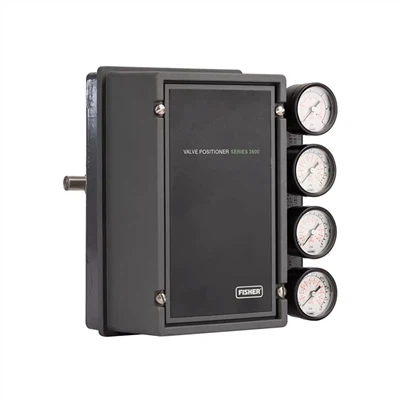
The takeaway here isn’t that one is better than the other—it’s that the right choice depends entirely on your specific application: valve size, line pressure, fluid type, required actuation speed, and maintenance resources. If you’re not sure which to pick, that’s where our team comes in. We’ve been working with valve actuators for over a decade, and we know the ins and outs of every industry from food and beverage to oil and gas to water treatment. We don’t just sell parts—we help you pick the right actuator to keep your process running smoothly, safely, and cost-effectively. We’d be happy to walk through your requirements, answer any questions, and help you find the perfect fit for your valves.
Fisher Valve Parts References
- ISA. (2020). Valve Actuator Technology and Application Standards. International Society of Automation.
- Miller, R. (2019). Industrial Valve Actuators: Selection, Operation, and Maintenance. McGraw-Hill.
- Pump Industry Association of America. (2021). Actuator Design for Fluid Control Systems. PIAA Press.
Century Weiye (Dalian) Control Equipment Co., Ltd.
As one of the leading valve actuator manufacturers and suppliers in China, we warmly welcome you to buy discount valve actuator in stock here from our factory. If you have any enquiry about quotation, please feel free to email us. Quality products and reasonable price are available.
Address: 2205, Building 8, Red Star International, Ganjingzi District, Dalian City, Liaoning Province
E-mail: serena@valvesjwy.com
WebSite: https://www.valve-sjwy.com/
