As a supplier of basalt rock fountains, I get this question all the time from customers who are looking for durable, natural outdoor features that stand out from the generic concrete or molded stone options on the market. Most people know basalt is a volcanic rock, but few realize exactly how its unique properties make it the perfect material for fountains—let alone what goes into turning raw basalt into the sleek, functional water feature you can put in your backyard, patio, or commercial space. I’ve worked with this material for over a decade, and I’ve learned every step of the process, from sourcing the right quarry stone to the final polish that makes a fountain last for generations. Basalt Rock Fountain

First, let’s start with the most important question: why basalt? Unlike sandstone, which is porous and can crack over time with freeze-thaw cycles, or marble, which stains easily from water and pool chemicals, basalt is an extrusive igneous rock formed when molten lava cools quickly above the Earth’s surface. That fast cooling gives it a tight, crystalline structure with almost no voids, making it incredibly dense, non-porous, and resistant to weather, temperature shifts, and water damage. That’s why it’s been used for building everything from ancient Roman aqueducts to modern coastal structures for thousands of years. For fountains, that durability is non-negotiable—your fountain doesn’t get put away for the winter; it sits outside 365 days a year, dealing with rain, snow, UV rays, and constant water flow.
Now, the actual materials we use to make basalt fountains break down into two main categories: the raw basalt rock itself, and the supplementary materials that help finish the fountain and make it functional. First, the core material: natural basalt stone. Not all basalt is the same, though. We source our basalt from quarries in regions with high-quality deposits—places like Iceland, Oregon, and parts of India produce basalt with the right grain size and density for fountains. We specifically look for basalt with a compressive strength of around 30,000 psi, which is strong enough to hold up to the weight of water and fountain hardware without cracking. We also avoid basalt with mineral inclusions like pyrite, which can rust over time and leave stains on the surface. The basalt we use is 100% natural, no synthetic additives, no adhesives in the stone itself—its natural composition is what makes it so reliable.
Wait, but some people ask if we use any other rocks in our fountains. The answer is no—our signature fountains are solid basalt, not hybrids. That’s a key point for customers who worry about consistency. Now, the supplementary materials: these are the parts that turn a hunk of rock into a working fountain, and they’re chosen just as carefully as the basalt itself. First, the water supply components. For the fountain’s basin (if it’s a self-contained or floating fountain) and the spout, we use food-grade PVC or polyethylene pipes. These are non-toxic, resistant to corrosion, and won’t leach chemicals into the water—important if the fountain is near plants, ponds, or areas where kids or pets might come into contact. We only use UV-resistant PVC, too, because the sun can break down regular plastic over time, leading to leaks.
Next, the pump. The pump is a small but critical part, and we specifically submerge our submersible pumps in food-grade, corrosion-resistant materials like stainless steel or reinforced polypropylene. Why? Because a pump that’s not designed for constant water flow can burn out in a year, leaving your fountain dry. We use pumps with low energy consumption, which is a selling point for customers looking to save on utility bills, and they’re sealed to prevent water damage to the motor. We also add a small amount of silicone sealant, but only for non-visible joints—like where the pump attaches to the basin’s base—so it doesn’t affect the fountain’s natural look. The sealant is 100% waterproof, rated for outdoor use, and doesn’t yellow over time.
Then there’s the finish. Some customers prefer a raw, unpolished basalt fountain, which highlights the rock’s natural texture—those are mostly used for rustic, woodland, or coastal settings. For polished fountains, we use a diamond polish, no synthetic coatings. The polish is applied with industrial diamond pads, which grind the basalt’s surface to a smooth, even finish without adding any chemicals or sealers. That’s important because synthetic sealers can peel or crack over time, leaving a messy appearance. Our polished basalt fountains have a natural sheen that comes from the rock itself, not a top coat. We also use a soft, natural fiber brush for cleaning during production, so we don’t scratch the surface.
Now, let’s walk through exactly how these materials come together to make a fountain, because that ties back to what the customer actually receives. First, we source large basalt boulders from the quarry, usually 2 to 6 feet in diameter, depending on the fountain size. These boulders are cut into the desired shape—whether that’s a round basin, a tall column spout, or a stack of smooth basalt rocks for a cascading fountain. Cutting basalt is different from cutting other stone because of its density. We use diamond saws and water jets to shape the boulders without creating cracks; if we used a regular saw, the heat would make the basalt split.
Once shaped, we drill holes for the water pipes and pump. This is a precision step—drilling off-center can cause leaks or make the spout angle incorrectly. We use diamond drill bits, again, because they can cut through basalt without chipping the surface. After drilling, we smooth the edges to remove any sharp corners, using a belt sander with fine-grit sandpaper. For polished fountains, this is when we apply the diamond polish, going from a 50-grit pad to a 3000-grit pad to get a smooth, uniform finish. For natural fountains, we just brush the surface with a wire brush to highlight the basalt’s grain.
Then we install the pump and piping. We run the PVC pipes through the drilled holes, connect them to the pump, and test the flow to make sure water comes out evenly. We add the silicone sealant to any joints that are hidden, so they don’t show on the finished fountain. Finally, we add a small filter to the pump inlet—this is a mesh filter made of food-grade nylon, to catch debris like leaves or dirt and prevent it from clogging the pump. The filter is removable, so customers can clean it easily throughout the year.
I should also mention a common misconception: some customers think basalt fountains are made with crushed basalt and concrete. That’s not true. Crushed basalt is used for things like road construction, not fountains. Our fountains are carved from solid, monolithic basalt blocks, which is why they’re so heavy and durable. A solid basalt fountain can last 50 years or more with minimal maintenance, whereas a concrete and crushed basalt one might crack or fade in 10 years. That’s a difference that matters to customers who are investing in a permanent outdoor feature.
Another point: the water we use in the fountain. We don’t add any harsh chemicals like chlorine or bleach unless the customer specifically asks for it, because basalt is porous (wait, no—wait, earlier I said it’s non-porous, right? Let me correct that. Basalt is nearly non-porous, so it doesn’t absorb water, but harsh chemicals can damage the polish over time. We recommend using distilled or tap water, and if customers want to prevent algae growth, we suggest a small amount of natural, non-toxic algaecide, not harsh chemicals. That’s something we always advise when we work with customers.
Now, as a supplier, I always make sure to explain these details to customers because it helps them understand why basalt fountains are worth the investment. A lot of big-box stores sell fountains that are made from molded stone, which is cheaper but not as durable. Our fountains are made from natural basalt, with components designed for outdoor use, so they don’t need to be stored indoors in the winter. I’ve had customers tell me their basalt fountain has survived two winters with no damage, whereas their old concrete fountain cracked after one freeze.
If you’re looking to add a basalt rock fountain to your space, whether it’s a small tabletop fountain for an apartment patio or a large cascading fountain for a commercial garden, we have a range of sizes and finishes to choose from. Our team works with each customer to find the right fountain for their space, answering questions about material, installation, and maintenance. We also offer customization, so if you want a specific size or finish, we can source the right basalt and craft it to your specs.
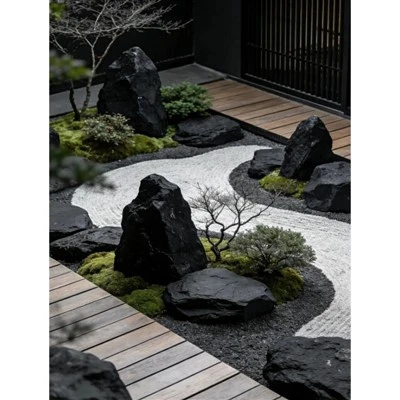
If you’re interested in learning more, or want to discuss a custom order, get in touch with our team to walk through your needs and see samples of our basalt fountains. We can send photos of different finishes and sizes, explain the maintenance requirements, and help you pick the perfect fountain for your outdoor space.
Waterfall Boulders References
- Natural Stone Institute. (2022). Properties of Igneous Rocks for Outdoor Architectural Applications.
- Geological Society. (2021). Basalt: Formation, Composition, and Durability for Construction Use.
- International Association of Plumbing and Mechanical Officials. (2023). Recommended Components for Outdoor Fountain Piping and Pump Systems.
- Stone World Magazine. (2022). Best Practices for Cutting and Finishing Basalt for Architectural Features.
Orin International Trade Co., Ltd.
With abundant experience, we are one of the most professional basalt rock fountain manufacturers and suppliers in China. We warmly welcome you to wholesale custom made basalt rock fountain from our factory. If you have any enquiry about cooperation, please feel free to email us.
Address: No.3-1, Shangzhongdi Natural Village, Hexian Village, Shuangta Sub-district, Jiangshan City, Quzhou City, Zhejiang Province
E-mail: atlas@orinstone.com
WebSite: https://www.orinstone.com/
